Putting AI at the Center of Supply Chain
Putting AI at the Center of Supply Chain
Putting AI at the Center of Supply Chain
Project Overview
Project Overview
Project Overview
Industry
Industry
Industry
Procurement Management / AI
Procurement Management / AI
Procurement Management / AI
Role
Role
Role
Lead UX Designer
Lead UX Designer
Lead UX Designer
Agentic Design
Agentic Design
Product Design
Product Design
UI
UI
Interaction Design
Interaction Design
Built in Code
Built in Code
THE PROBLEM
THE PROBLEM
The most-used screen was also the most complained about
The most-used screen was also the most complained about
The most-used screen was also the most complained about
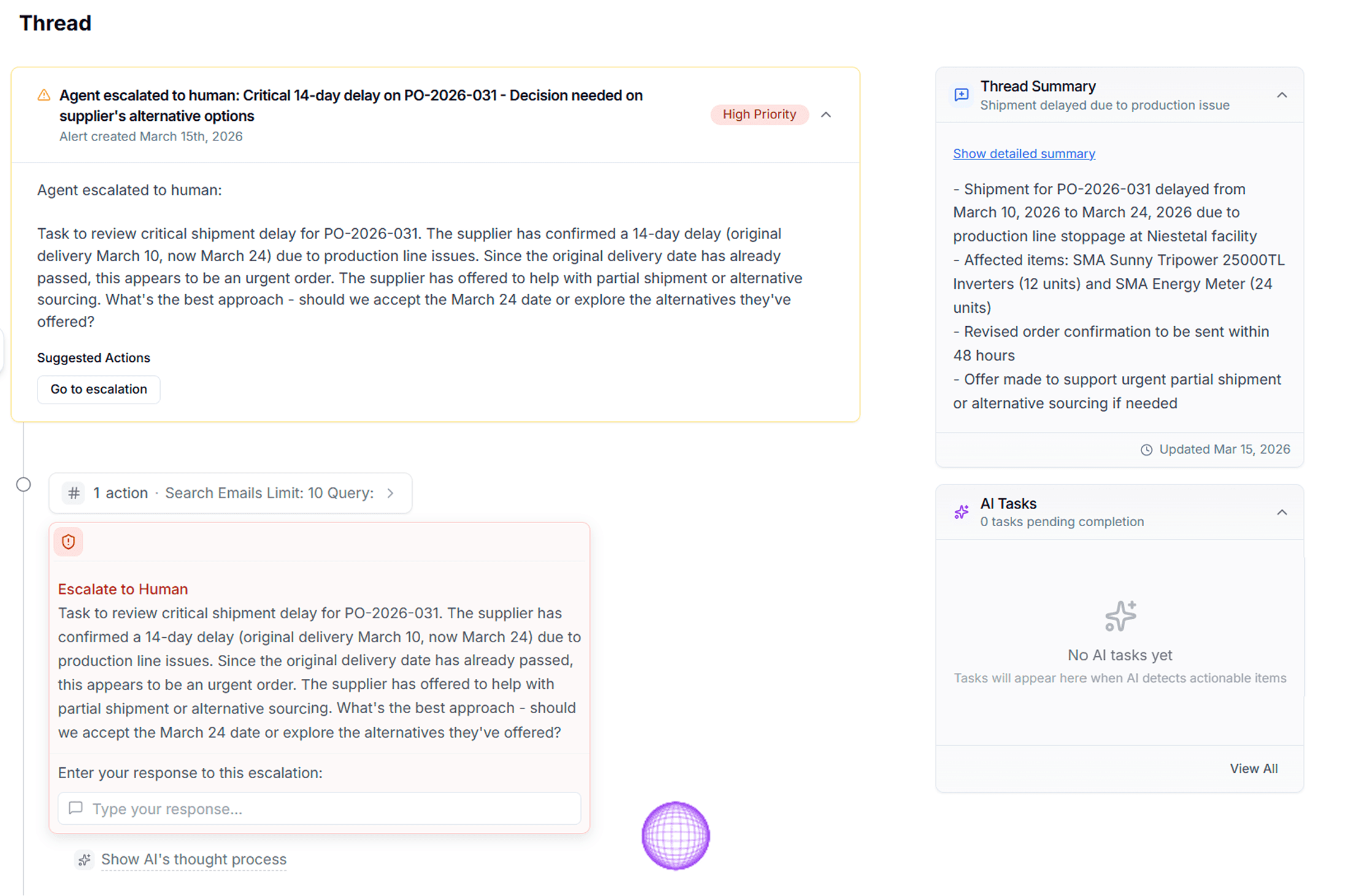
The thread detail page was the screen procurement specialists used most — and the one they complained about most. It was where they came to understand a live supplier situation and decide what to do, yet it asked for a deep read when all they needed was a glance.
The root cause wasn't density for its own sake. The intelligence that made the product worth using - the agent - was scattered across the page in five different forms, each with its own name and treatment, none of them obviously the same system.
The thread detail page was the screen procurement specialists used most — and the one they complained about most. It was where they came to understand a live supplier situation and decide what to do, yet it asked for a deep read when all they needed was a glance.
The root cause wasn't density for its own sake. The intelligence that made the product worth using - the agent - was scattered across the page in five different forms, each with its own name and treatment, none of them obviously the same system.
Before the redesign
Before the redesign
Before the redesign
Before the redesign
THE DECISION
THE DECISION
We made the agent the center of the page, not a feature inside it
We made the agent the center of the page, not a feature inside it
We made the agent the center of the page, not a feature inside it
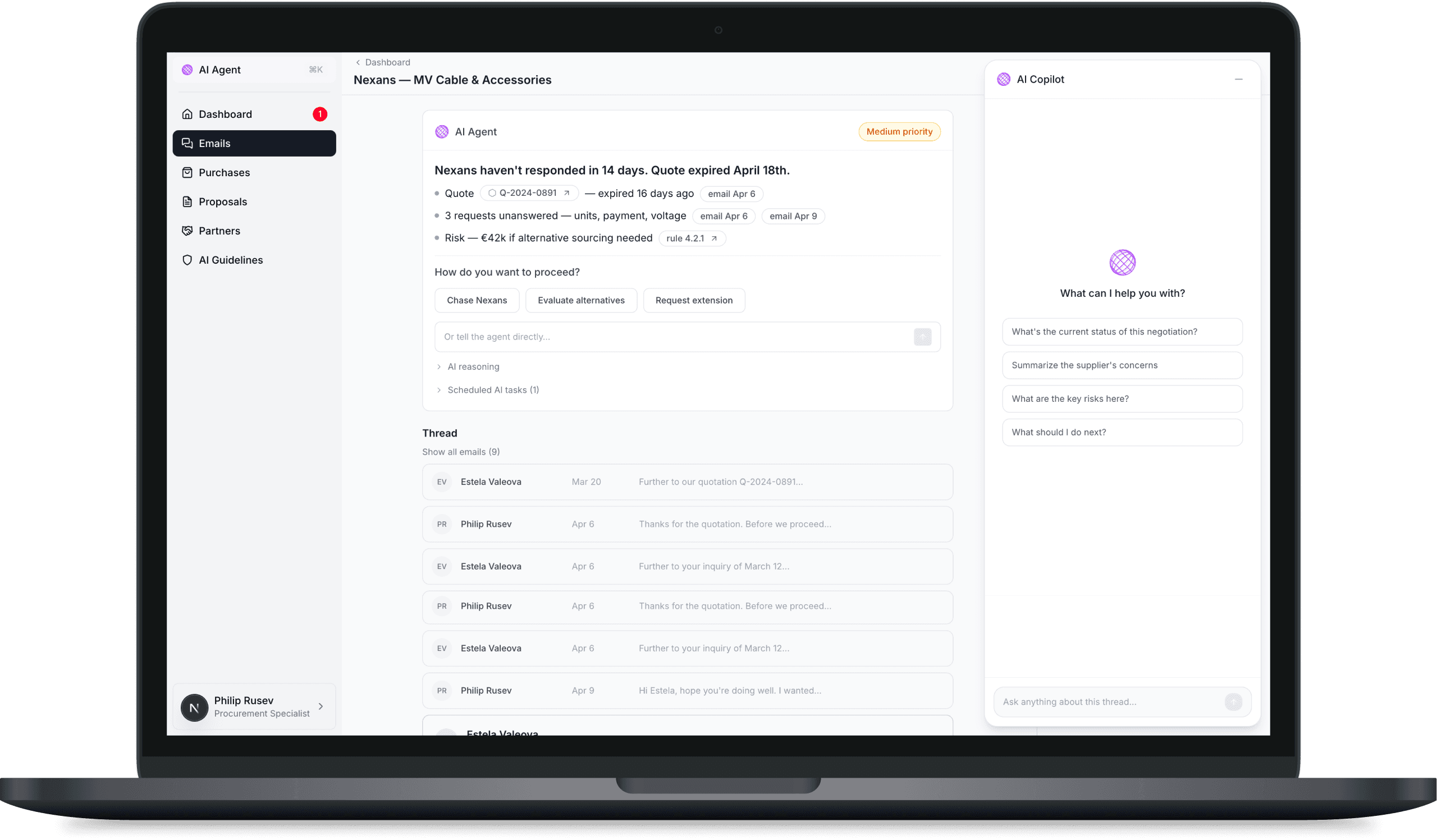
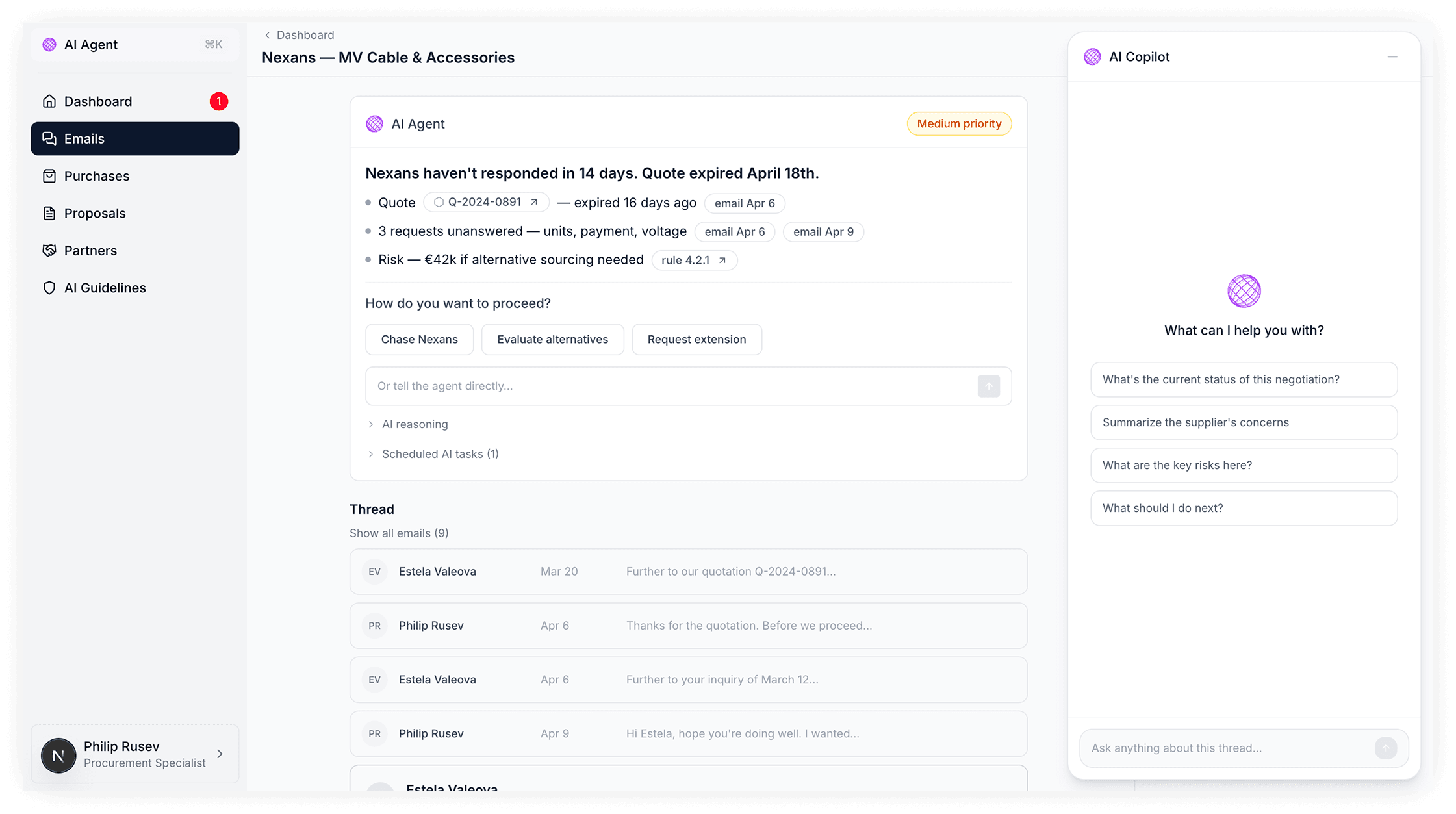
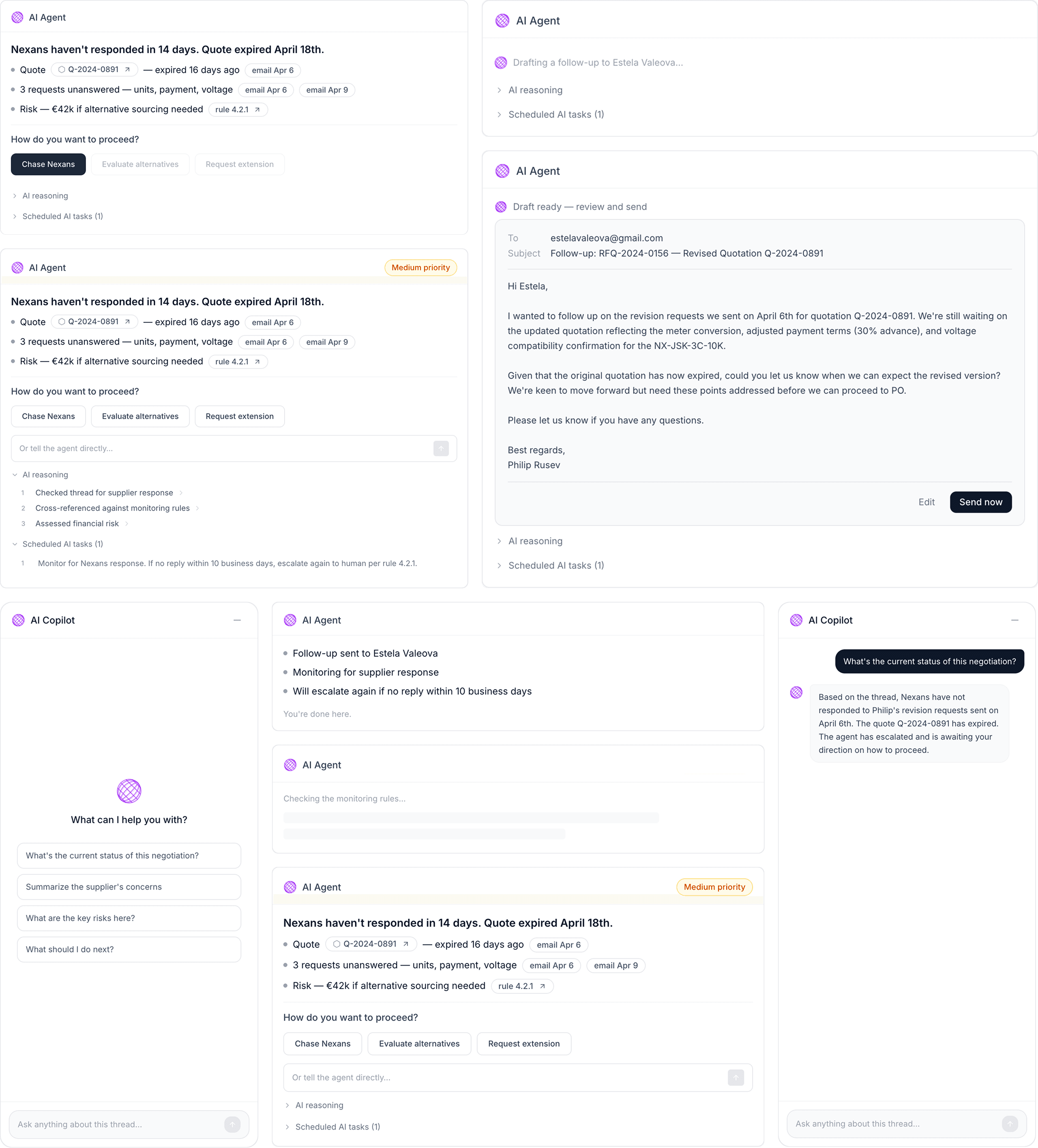
We collapsed every fragment of the agent into one identity, then pulled it out of the email thread and made it the central element of the page.
The thread became evidence; the agent became the interface. The user now opens the page and reads the agent first - what it found, what it did, what it needs from them - with the raw emails sitting underneath as support rather than the main event.
We collapsed every fragment of the agent into one identity, then pulled it out of the email thread and made it the central element of the page.
The thread became evidence; the agent became the interface. The user now opens the page and reads the agent first - what it found, what it did, what it needs from them - with the raw emails sitting underneath as support rather than the main event.
THE CRAFT
THE CRAFT
A copilot that behaves like a partner, not a panel
A copilot that behaves like a partner, not a panel
A copilot that behaves like a partner, not a panel
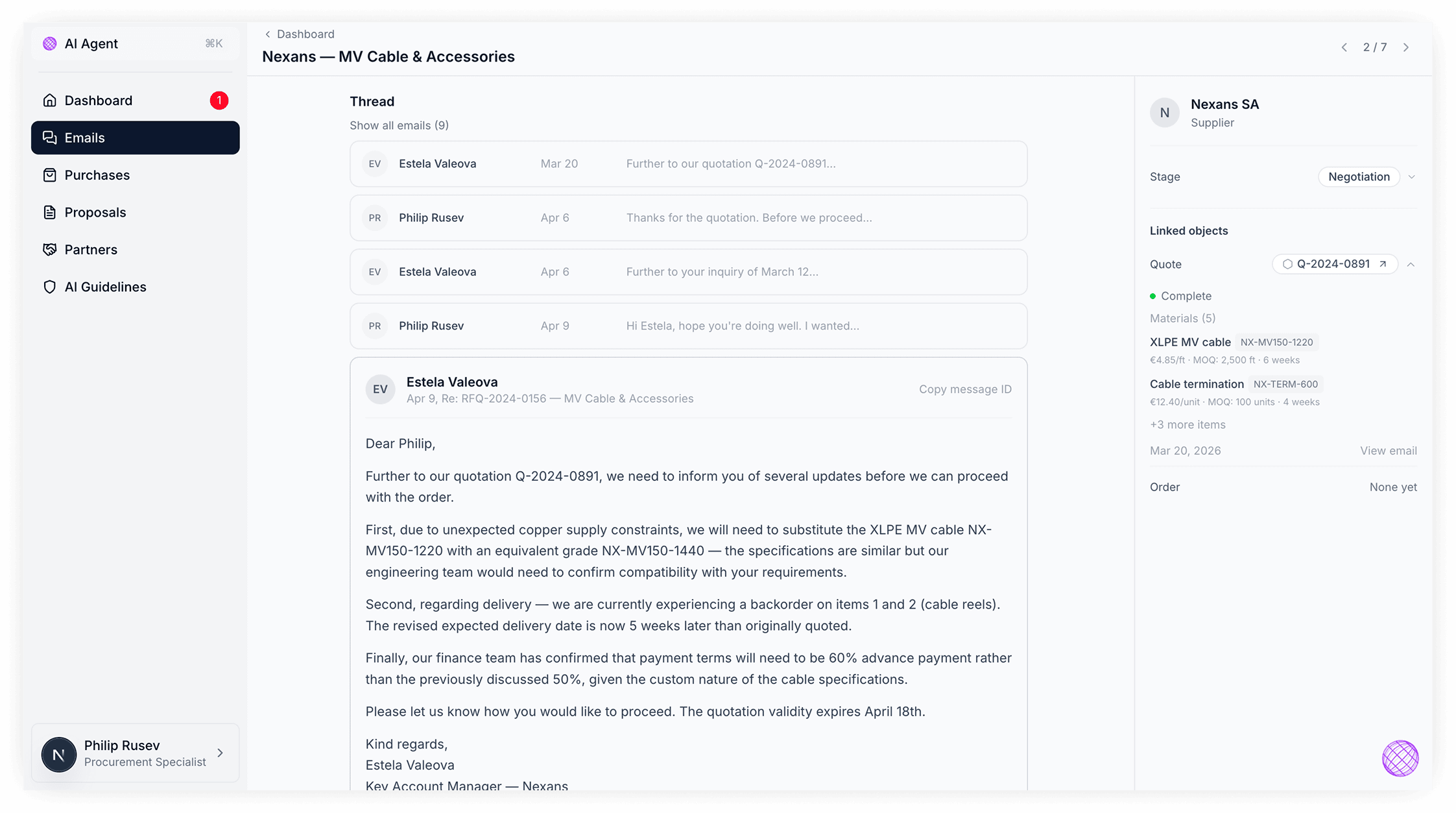
central agent is only as good as how it feels to work with, so most of the detail went into making it interactive. We leaned on the interaction patterns that make tools like Claude and Perplexity feel effortless - flexible input, legible responses, transparent sourcing - and built a copilot that behaves like a partner rather than a panel.
Animation and interaction design carried the rest: staggered entrance, a loading state that narrates what the agent is doing, and transitions that connect a claim to its source so trust is felt, not explained.
central agent is only as good as how it feels to work with, so most of the detail went into making it interactive. We leaned on the interaction patterns that make tools like Claude and Perplexity feel effortless - flexible input, legible responses, transparent sourcing - and built a copilot that behaves like a partner rather than a panel.
Animation and interaction design carried the rest: staggered entrance, a loading state that narrates what the agent is doing, and transitions that connect a claim to its source so trust is felt, not explained.
THE PROCESS
THE PROCESS
An agentic design OS did the first pass; I did the last
An agentic design OS did the first pass; I did the last
An agentic design OS did the first pass; I did the last
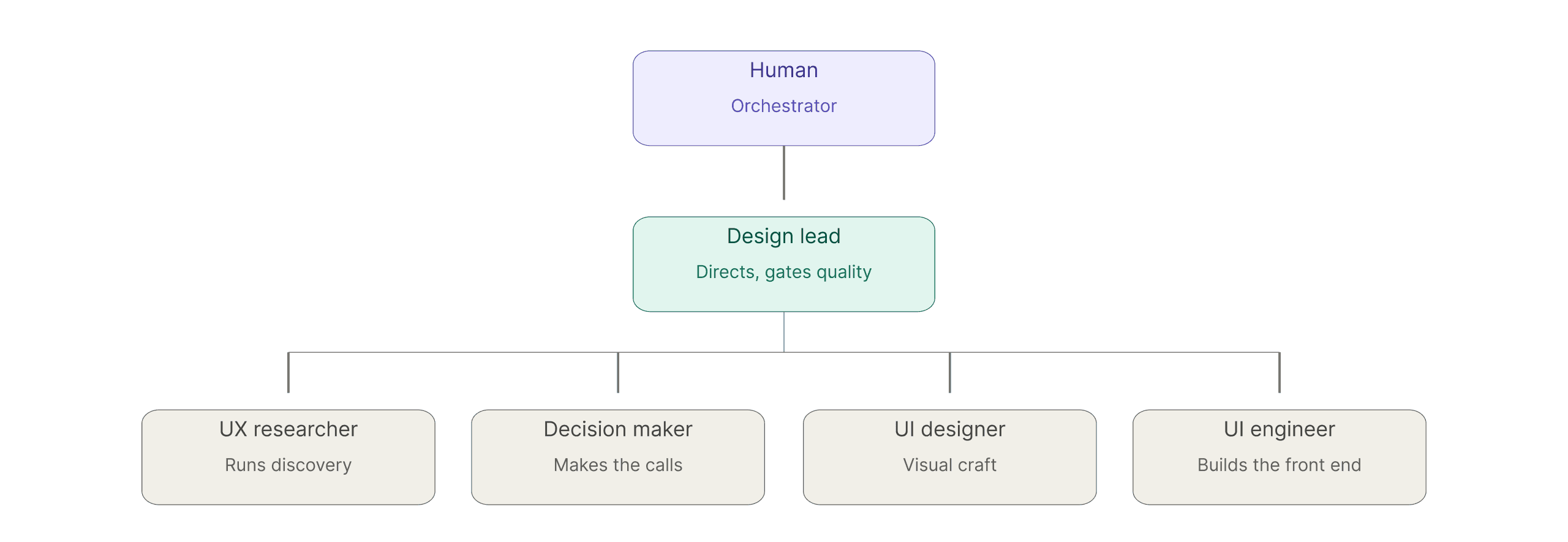
The redesign was driven by an agentic design OS - a multi-agent team with explicit roles: research, UX, product design, UI, with a design lead orchestrating and gating quality. The agents ran the discovery, reasoned through the core decisions, and scaffolded the front-end environment in React, ShadCN, and Tailwind.
They produced the first working draft. I cleaned it up - tightening hierarchy, interaction detail, and motion against the bar set by Linear, Notion, and Intercom. Agents as engine, human as editor.
The redesign was driven by an agentic design OS - a multi-agent team with explicit roles: research, UX, product design, UI, with a design lead orchestrating and gating quality. The agents ran the discovery, reasoned through the core decisions, and scaffolded the front-end environment in React, ShadCN, and Tailwind.
They produced the first working draft. I cleaned it up - tightening hierarchy, interaction detail, and motion against the bar set by Linear, Notion, and Intercom. Agents as engine, human as editor.
THE OUTCOME
THE OUTCOME
One agent, one identity, at the center of the screen
One agent, one identity, at the center of the screen
One agent, one identity, at the center of the screen
The page now communicates - before the user reads a word they don't need to - that an intelligent partner has already done the work and is waiting to be directed.
The page now communicates - before the user reads a word they don't need to - that an intelligent partner has already done the work and is waiting to be directed.
Glance, not read
Glance, not read
A page that demanded a deep scroll now answers in one look: what happened, what the agent did, what it needs. The skim users were already attempting finally works.
One agent, zero ambiguity
One agent, zero ambiguity
Five AI labels and treatments collapsed into a single identity. Users no longer reconcile whether they're dealing with one system or five — the intelligence reads as one trusted partner.
Trust made visible
Trust made visible
Agent reasoning moved from a buried toggle to an always-present transparency footer. Every claim traces to its source — the explainability regulated buyers require, surfaced instead of hidden.
2026 all rights reserved


2026 all rights reserved
2026 all rights reserved
2026 all rights reserved